
Description
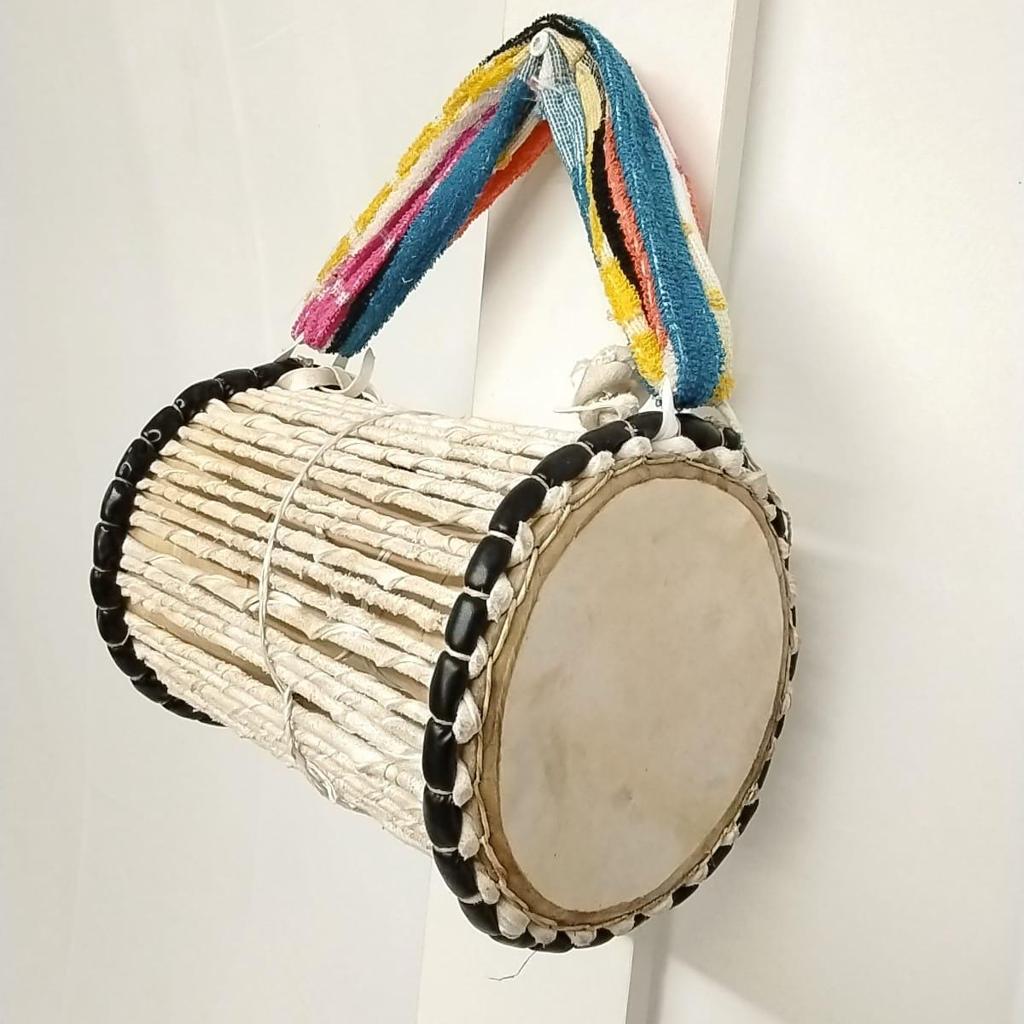
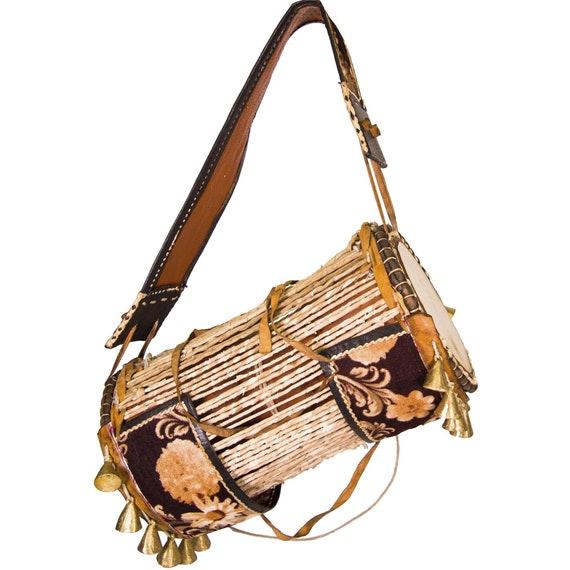
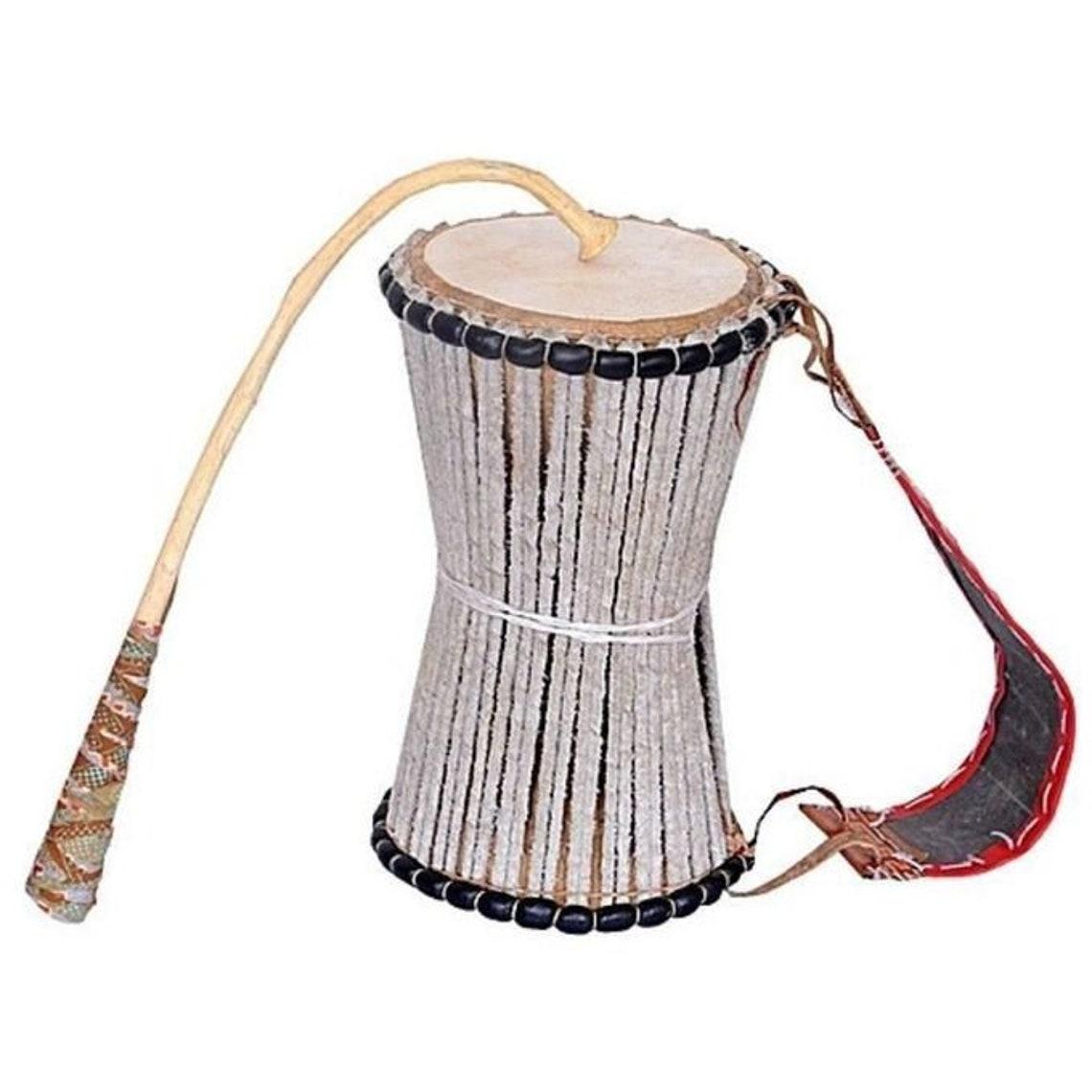
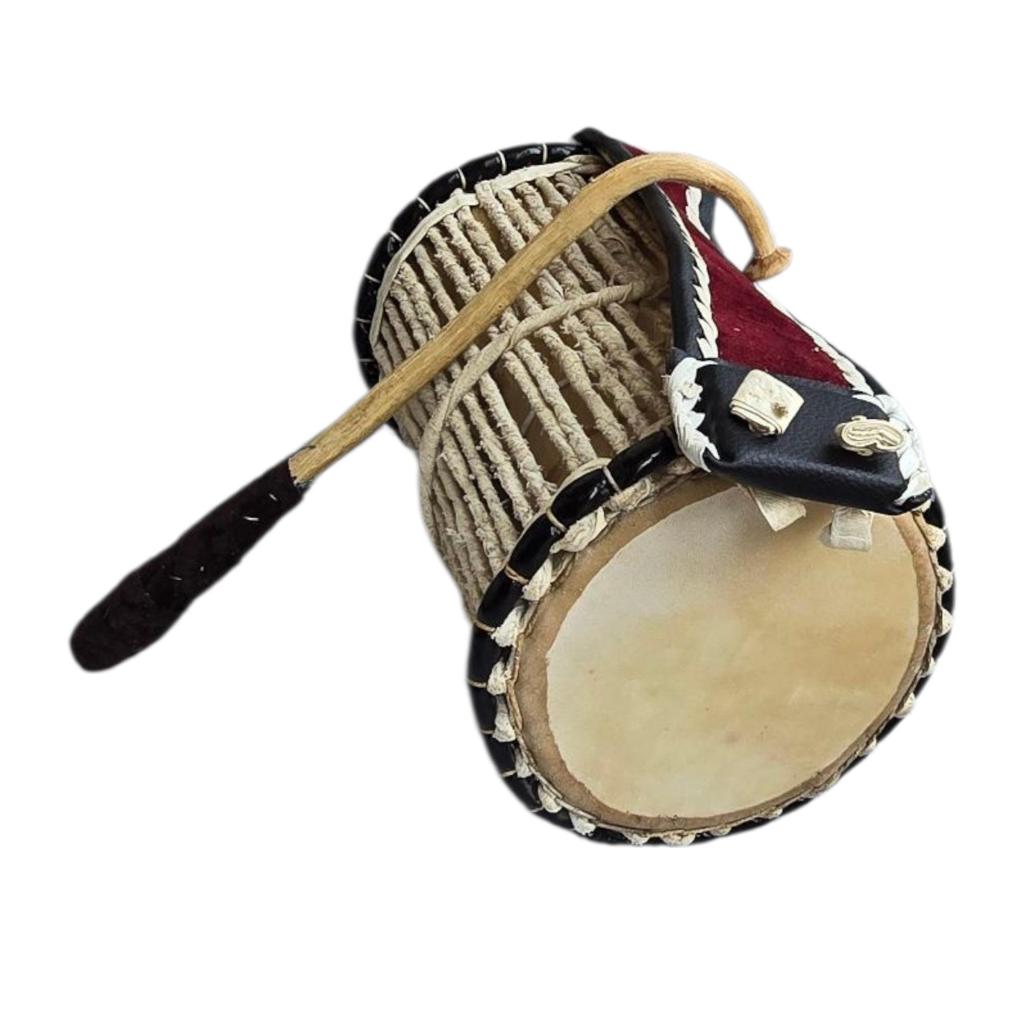
The talking drum (known distinctively as the Dùndún or Gangan among the Yoruba people of Nigeria, and by various names across West Africa like the Dondo in Ghana) is an iconic, hourglass-shaped percussion instrument.
It is unique because it can literally “talk,” mimicking the pitch, tone, cadence, and inflection of human tonal languages.
Key Features and Components
The talking drum is a marvel of acoustic engineering, built with specific components that allow it to shift pitches dynamically:
- Hourglass-Shaped Wooden Shell: Traditionally hand-carved from sturdy hardwood, the hollow body acts as a natural acoustic chamber that gives the drum its resonance and deep tone.
- Animal Skin Drum Heads: Membranes stretched across both ends of the instrument (typically made of goat skin).
- Tension Cords & Pressure Strings: Leather or sturdy fabric cords connect the two drum heads. By tucking the drum under their arm and squeezing or releasing the pressure on these cords, the player tightens or loosens the skin
- Pitch Modulation (The “Talking” Mechanism): Squeezing the strings raises the pitch, while releasing them lowers it. This rapid manipulation allows the player to replicate the exact vocal intonations of words, proverbs, and praise poetry.
- The Beater (Curved Stick): Players strike the drum head using a specially shaped, curved wooden stick to produce sharp, distinct notes while keeping a steady rhythm with their fingers.
BEST FOR:
Traditionally and culturally, the talking drum is open to specific groups, though modern music has broadened its accessibility:
- Master Drummers and Cultural Custodians: Historically, the skill is passed down through generations within specific families or specialized hereditary artisan groups (often linked to West African griots, storytellers, and oral historians). Becoming a master takes years of rigorous study because the player must be fluent in the tonal language, cultural proverbs, and historical praise poetry of the community.
2. Traditional Apprentices (Young Boys): Traditionally, training begins in childhood, with young boys learning through observation, oral transmission, and active participation in family or community drumming circles.
3. Contemporary Musicians and Performers: Today, anyone interested in percussion can learn to play the talking drum. It is widely used by professional musicians across genres like Jùjú music, Afrobeat, and world music. Modern percussionists, music students, and cultural enthusiasts worldwide study the instrument to incorporate its rich, expressive voice into contemporary compositions.
Reviews
There are no reviews yet.